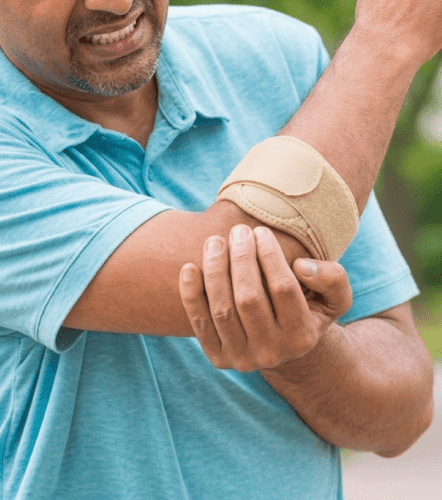
Personalised physiotherapy for knee osteoarthritis to reduce pain, improve joint mobility, and help you return to everyday activities — walking, climbing stairs, and standing — comfortably and confidently.
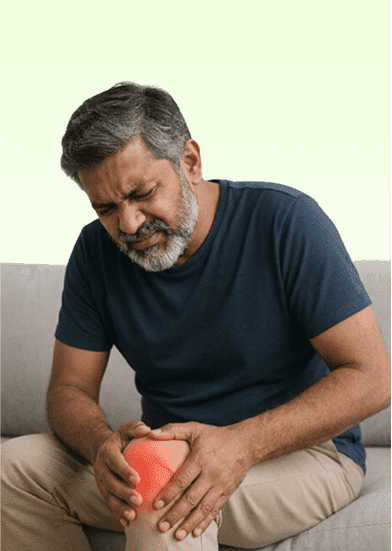
Knee osteoarthritis is a degenerative joint condition where the protective cartilage gradually wears away, causing the bones to rub together. This leads to persistent pain, stiffness, swelling, and a grinding sensation in the knee. Simple activities — walking to the market, climbing stairs, getting up from a chair — can become uncomfortable or exhausting. Many patients live with this pain for years, assuming it is just a normal part of ageing. It is not. Early physiotherapy can significantly slow the progression and reduce pain without surgery.
Our physiotherapy approach for knee OA is structured around three goals: reducing pain and inflammation, restoring joint mobility and function, and strengthening the muscles that protect and support your knee. We use a combination of manual therapy, targeted exercise rehabilitation, electrotherapy (IFT, TENS, ultrasound), and patient education — creating a programme that is progressive, monitored, and built around your condition's stage and your daily life.
Pain Reduction
Improved Joint Function
Faster Recovery vs Rest Alone
Designed to reduce pain, restore mobility, and improve your quality of life — with a programme built around your specific condition and recovery goals.
Targeted IFT, TENS, and ultrasound therapy reduce inflammation and relieve joint pain — providing lasting comfort, not temporary relief.
Graduated range-of-motion exercises restore the full arc of knee movement — so you can walk, bend, and climb stairs without discomfort.
Quadriceps, hamstrings, and hip strengthening exercises build a protective muscular frame around the knee joint — reducing mechanical load on damaged cartilage.
Stretching and soft tissue techniques improve joint flexibility, reduce morning stiffness, and ease the aching that worsens after long periods of sitting or standing.
Functional rehabilitation retrains movement patterns for activities like getting in and out of a car, using stairs, and walking longer distances — returning independence.
Every recovery journey is different.
Here is what our patients say about their experience at New Age Rehab.
Posted on GoogleTrustindex verifies that the original source of the review is Google. I had my shoulder treatment at New Age Home Physio with Dr. Junaid, and the experience was excellent. He carefully assessed my condition and created a personalized treatment plan. I noticed significant improvement in my pain and movement within a few sessions. Highly professional and highly recommended! The sessions were well-structured and very comfortable, and he patiently explained every step of the therapy. I truly appreciate the care and dedication shown throughout my recovery process.Posted on GoogleTrustindex verifies that the original source of the review is Google. Dr Sharma's team is very helpful and courteous. Thank you for your efforts to trying to get me going.🙏Posted on GoogleTrustindex verifies that the original source of the review is Google. I had a very good treatment at New Age Physiotherapy Centre, Uday Park. Dr. Junaid Ansari is an excellent physiotherapist—highly knowledgeable, well-behaved, and very professional. He is extremely caring and attentive towards his patients and explains the treatment clearly. I felt comfortable and satisfied throughout my sessions. His approach to patient care is truly commendable. I would highly recommend this centre to anyone looking for quality physiotherapy treatment. I am very thankful to Dr. Rahul Sharma for suggesting the right treatment for me. His guidance was clear and reassuring, and the entire treatment process went very smoothly.I truly appreciate his support and care. My thanks to Dr. Anam & other staff.My sincere thanks to Dr Junaid who was my physiotherapy doctor. Thank you very much for your guidance & therapy.Posted on GoogleTrustindex verifies that the original source of the review is Google. The Physio clinic centre is an excellent centre . They attend very promptly. I am extremely satisfied with my progress especially after my lung cancer where Anam Siddiqui has been very professional in her work and helped me to recover . I am playing my tennis now . Cdr Ravi Inder singhPosted on GoogleTrustindex verifies that the original source of the review is Google. A lot of care! And it’s good to have a qualified and patient doctor around, Dr Rahul Sharma. His team is also good!Posted on GoogleTrustindex verifies that the original source of the review is Google. Had gone for a hamstring pull and issues with knees and Dr Junaid and Dr Rahul helped overcome them within days!Posted on GoogleTrustindex verifies that the original source of the review is Google. Mr Junaid Ansari one of the best professional and work oriented person from this clinic. I took session from him and now can walk and move easily. He has the very good knowledge of each ligaments and doing treatment by physi accordingly. Now I am able to do walk and inflammation has been reduced. Thankyou for the guidance and therapy.
Have questions about Knee Osteoarthritis treatment? Here are the most common queries — to help you understand what to expect and how physiotherapy can help.
Yes. Physiotherapy is one of the most evidence-backed non-surgical treatments for knee OA. A structured programme reduces pain, improves mobility, and can significantly slow disease progression — in many cases delaying or avoiding the need for knee replacement surgery.
Most patients notice meaningful pain reduction within 3–4 weeks of consistent physiotherapy. Full functional improvement — being able to walk comfortably and manage stairs — typically takes 8–12 weeks depending on the severity of the condition.
Yes — when guided by a physiotherapist. The right exercises actually reduce pain and protect the joint. Unsupervised high-impact activity can worsen the condition. Your physiotherapist will design a programme that challenges the joint safely, without aggravating it.
Not necessarily. For mild to moderate knee OA, physiotherapy combined with lifestyle modification is highly effective. Surgery becomes necessary only in severe cases where the joint space is critically reduced. Starting physiotherapy early significantly improves the likelihood of avoiding surgery.
Knee OA is caused by the gradual breakdown of cartilage in the knee joint. Common risk factors include age (most common after 45), excess body weight, previous knee injuries, repetitive strain, and genetic predisposition. Women are more commonly affected than men.
Yes. Your physiotherapist will advise you on safe activity levels throughout your treatment. Walking — in the right amount and with the right technique — is actually beneficial for knee OA. You will receive clear guidance on what activities to continue, modify, or temporarily avoid.
Discover treatments that support your recovery and improve overall movement and function.
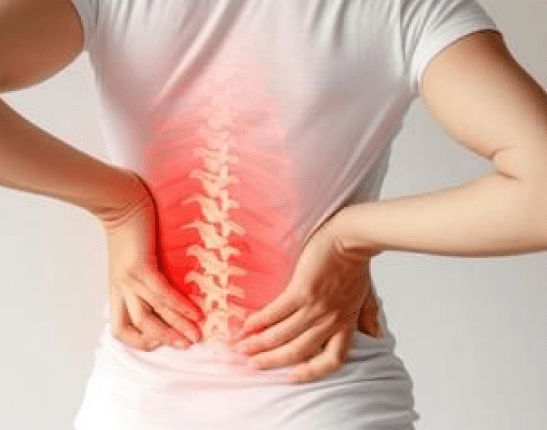
Ankylosing spondylitis (AS) is a chronic inflammatory arthritis that primarily affects the spine and sacroiliac joints.
Relieve numbness and wrist pain caused by median nerve compression.
Select Your Nearest Centre
No surgery needed. 94.2% of our patients recover with a plan built just for them.
Select Your Nearest Centre