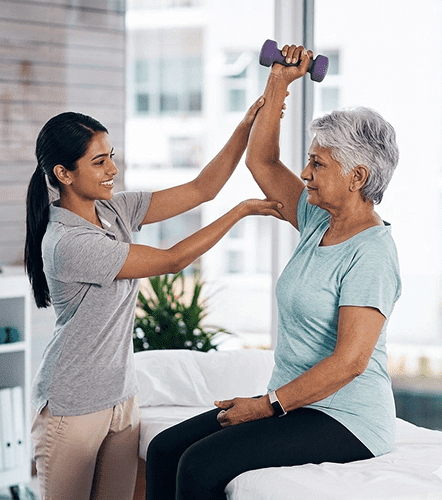
A comprehensive suite of exercise and rehabilitation equipment designed to rebuild strength, restore balance, and progressively restore functional movement — for every stage of your recovery.
Pain relief is only the first stage of recovery. The second — and arguably more important — stage is rebuilding the strength, balance, coordination, and functional capacity that your injury or surgery has reduced. Without access to the right rehabilitation equipment and a structured, progressive programme, patients often plateau: pain-free but physically limited, unable to return to work, sport, or daily activities at their pre-injury level. Our rehabilitation gym provides the complete equipment environment for every phase of recovery — from early post-surgical mobilisation to full athletic conditioning.
Exercise rehabilitation is the systematic, progressive use of therapeutic exercise to restore physical capacity after injury, surgery, or illness. Unlike gym workouts, rehabilitation exercise is clinically prescribed — each exercise selected for its specific therapeutic effect at the right stage of healing, at the right intensity, and with the right technique. Our physiotherapists design and supervise your entire exercise programme — progressing it each session as your capacity improves, and ensuring every movement is performed correctly to maximise benefit and prevent re-injury.
Progressive resistance training using bands, free weights, and pulleys — building muscle strength from early post-injury rehabilitation to full athletic conditioning.
Controlled walking and running rehabilitation — from early post-surgical gait at slow speed to graduated return-to-running protocols for athletes.
Extra Corporeal Shock-wave Therapy delivers high-energy acoustic pulses to chronic tendon conditions, plantar fasciitis, and calcific tendinitis — stimulating healing in tissue that has become chronically degenerative.
Low-impact cardiovascular conditioning — restoring aerobic fitness lost during injury or surgery without loading injured joints.
Ankle, knee, and hip proprioceptive rehabilitation — restoring the balance and joint position sense that is critically lost after ligament injuries and surgery.
Targeted strengthening of specific muscle groups — quadriceps, hamstrings, rotator cuff — for orthopaedic and sports injury rehabilitation.
Range of motion and strengthening exercises for shoulder, elbow, and wrist rehabilitation — after surgery, tendon injuries, and neurological conditions.
Experience targeted, evidence-based treatment designed to relieve pain, restore movement, and improve your overall physical wellbeing — with a programme built around your specific condition.
Progressive, supervised resistance training systematically rebuilds the muscle strength needed for work, sport, and daily activity — not just pain-free movement.
Proprioceptive and balance training restores the neuromuscular control that is lost after joint injuries and surgery — critical for preventing re-injury.
Parallel bars, gait training equipment, and progressive weight-bearing tools provide the structured environment for stroke, spinal cord, and neurological gait rehabilitation.
A complete rehabilitation gym enables the full progression from early mobilisation to sport-specific conditioning — ensuring patients return to their pre-injury level of function.
Every recovery journey is different. Here is what our patients say about their experience at New Age Rehab.
Posted on GoogleTrustindex verifies that the original source of the review is Google. I had my shoulder treatment at New Age Home Physio with Dr. Junaid, and the experience was excellent. He carefully assessed my condition and created a personalized treatment plan. I noticed significant improvement in my pain and movement within a few sessions. Highly professional and highly recommended! The sessions were well-structured and very comfortable, and he patiently explained every step of the therapy. I truly appreciate the care and dedication shown throughout my recovery process.Posted on GoogleTrustindex verifies that the original source of the review is Google. Dr Sharma's team is very helpful and courteous. Thank you for your efforts to trying to get me going.🙏Posted on GoogleTrustindex verifies that the original source of the review is Google. I had a very good treatment at New Age Physiotherapy Centre, Uday Park. Dr. Junaid Ansari is an excellent physiotherapist—highly knowledgeable, well-behaved, and very professional. He is extremely caring and attentive towards his patients and explains the treatment clearly. I felt comfortable and satisfied throughout my sessions. His approach to patient care is truly commendable. I would highly recommend this centre to anyone looking for quality physiotherapy treatment. I am very thankful to Dr. Rahul Sharma for suggesting the right treatment for me. His guidance was clear and reassuring, and the entire treatment process went very smoothly.I truly appreciate his support and care. My thanks to Dr. Anam & other staff.My sincere thanks to Dr Junaid who was my physiotherapy doctor. Thank you very much for your guidance & therapy.Posted on GoogleTrustindex verifies that the original source of the review is Google. The Physio clinic centre is an excellent centre . They attend very promptly. I am extremely satisfied with my progress especially after my lung cancer where Anam Siddiqui has been very professional in her work and helped me to recover . I am playing my tennis now . Cdr Ravi Inder singhPosted on GoogleTrustindex verifies that the original source of the review is Google. A lot of care! And it’s good to have a qualified and patient doctor around, Dr Rahul Sharma. His team is also good!Posted on GoogleTrustindex verifies that the original source of the review is Google. Had gone for a hamstring pull and issues with knees and Dr Junaid and Dr Rahul helped overcome them within days!Posted on GoogleTrustindex verifies that the original source of the review is Google. Mr Junaid Ansari one of the best professional and work oriented person from this clinic. I took session from him and now can walk and move easily. He has the very good knowledge of each ligaments and doing treatment by physi accordingly. Now I am able to do walk and inflammation has been reduced. Thankyou for the guidance and therapy.
Have questions about Exercise & Rehabilitation Tools? Here are the most common queries — to help you understand what to expect and how this treatment works.
Yes — always. All exercise rehabilitation at New Age Rehab is designed and supervised by a qualified physiotherapist. We do not operate as an unsupervised gym. Your programme is progressed each session based on your clinical response.
This depends on your specific surgery. After most orthopaedic surgeries, gentle exercises begin in the first 24–48 hours. Progressive strengthening and more demanding rehabilitation typically starts 2–4 weeks post-operatively. Your physiotherapist will follow your surgeon’s protocol precisely.
Rehabilitation exercise is clinically prescribed — every exercise is selected for its specific therapeutic purpose at your stage of healing. Exercises are introduced in a precise sequence, at the right intensity, with careful technique monitoring. Generic gym training at the wrong stage of recovery can cause re-injury.
Yes. We have specific equipment and protocols for neurological rehabilitation — including parallel bars for gait training, balance platforms for proprioceptive re-education, and cardiovascular equipment for aerobic conditioning after stroke and spinal cord injury.
Sessions typically last 45–60 minutes. The overall programme duration depends on your condition — from 6–8 weeks for acute sports injuries to 6–12 months for post-surgical neurological rehabilitation. Your physiotherapist will give you a realistic timeline at the first assessment.
Yes — and this is strongly encouraged. Your physiotherapist will provide a structured home exercise programme that complements your clinic sessions. Consistent home exercise significantly accelerates your recovery and reduces the total number of clinic sessions needed.
Discover other physiotherapy facilities designed to support your recovery and overall wellbeing.
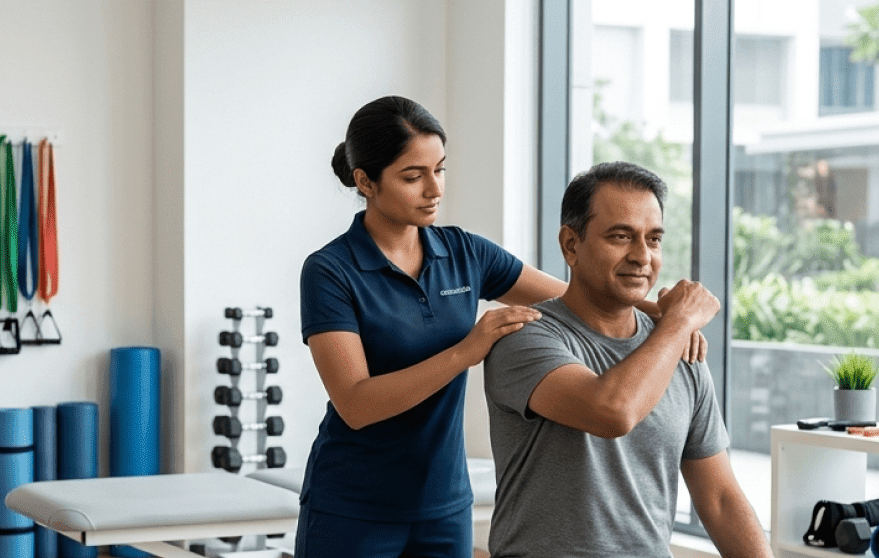
Specialized programs for heart patients focusing on safe and monitored recovery.
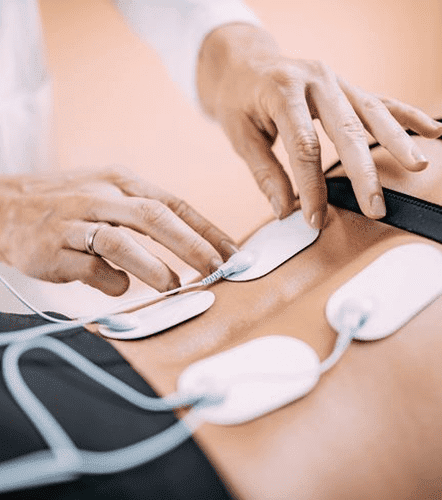
Progressive strength, balance, and cardiovascular rehabilitation equipment.
Select Your Nearest Centre
No surgery needed. 94.2% of our patients recover with a plan built just for them.
Select Your Nearest Centre