Targeted physiotherapy for trigger finger — relieving the painful snapping, locking, and stiffness in your finger so you can grip, type, and move your hand freely again.
Designed to reduce pain, restore mobility, and improve your quality of life — with a programme built around your specific condition and recovery goals.
Ultrasound therapy and manual techniques reduce inflammation in the tendon sheath — relieving the tender nodule at the finger base that causes locking.
Targeted tendon gliding exercises progressively restore the tendon’s ability to move freely through the sheath — eliminating the catching and locking sensation.
Gentle mobilisation and stretching reduce joint stiffness and restore full finger range of motion — from fully open to a complete fist.
Early physiotherapy in Grades 1 and 2 trigger finger significantly reduces the likelihood of requiring a cortisone injection or surgical tendon sheath release.
We identify and modify the gripping habits, posture, or tool use that is causing repetitive tendon irritation — preventing recurrence.
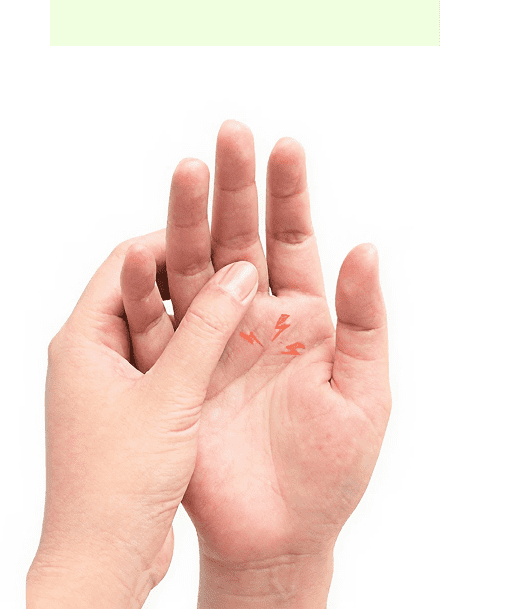
Trigger finger — or stenosing tenosynovitis — occurs when the tendon sheath surrounding the finger flexor tendon becomes inflamed and thickened, forcing the tendon to catch as it passes through the narrowed sheath. The result is a finger that locks in a bent position, snaps painfully when straightened, and feels stiff and tender at the base. It can affect any finger or thumb and is more common in people with diabetes, rheumatoid arthritis, or jobs requiring sustained gripping. In early stages, physiotherapy is highly effective — avoiding the need for cortisone injections or surgical release.

Our physiotherapy programme for trigger finger focuses on reducing tendon sheath inflammation, restoring full tendon gliding, and addressing the root cause of the overuse. Treatment includes splinting (to rest the tendon in a neutral position), manual soft tissue therapy, targeted tendon gliding exercises, ultrasound therapy for inflammation, and activity modification. Early intervention significantly reduces the chance of requiring surgery.
Resolve Without Surgery
Average Treatment
No Injections Needed
Every recovery journey is different.
Here is what our patients say about their experience at New Age Rehab.
Posted on GoogleTrustindex verifies that the original source of the review is Google. I had my shoulder treatment at New Age Home Physio with Dr. Junaid, and the experience was excellent. He carefully assessed my condition and created a personalized treatment plan. I noticed significant improvement in my pain and movement within a few sessions. Highly professional and highly recommended! The sessions were well-structured and very comfortable, and he patiently explained every step of the therapy. I truly appreciate the care and dedication shown throughout my recovery process.Posted on GoogleTrustindex verifies that the original source of the review is Google. Dr Sharma's team is very helpful and courteous. Thank you for your efforts to trying to get me going.🙏Posted on GoogleTrustindex verifies that the original source of the review is Google. I had a very good treatment at New Age Physiotherapy Centre, Uday Park. Dr. Junaid Ansari is an excellent physiotherapist—highly knowledgeable, well-behaved, and very professional. He is extremely caring and attentive towards his patients and explains the treatment clearly. I felt comfortable and satisfied throughout my sessions. His approach to patient care is truly commendable. I would highly recommend this centre to anyone looking for quality physiotherapy treatment. I am very thankful to Dr. Rahul Sharma for suggesting the right treatment for me. His guidance was clear and reassuring, and the entire treatment process went very smoothly.I truly appreciate his support and care. My thanks to Dr. Anam & other staff.My sincere thanks to Dr Junaid who was my physiotherapy doctor. Thank you very much for your guidance & therapy.Posted on GoogleTrustindex verifies that the original source of the review is Google. The Physio clinic centre is an excellent centre . They attend very promptly. I am extremely satisfied with my progress especially after my lung cancer where Anam Siddiqui has been very professional in her work and helped me to recover . I am playing my tennis now . Cdr Ravi Inder singhPosted on GoogleTrustindex verifies that the original source of the review is Google. A lot of care! And it’s good to have a qualified and patient doctor around, Dr Rahul Sharma. His team is also good!Posted on GoogleTrustindex verifies that the original source of the review is Google. Had gone for a hamstring pull and issues with knees and Dr Junaid and Dr Rahul helped overcome them within days!Posted on GoogleTrustindex verifies that the original source of the review is Google. Mr Junaid Ansari one of the best professional and work oriented person from this clinic. I took session from him and now can walk and move easily. He has the very good knowledge of each ligaments and doing treatment by physi accordingly. Now I am able to do walk and inflammation has been reduced. Thankyou for the guidance and therapy.
Have questions about Trigger Finger treatment? Here are the most common queries — to help you understand what to expect and how physiotherapy can help.
Yes — in the early stages (Grade 1 and Grade 2), physiotherapy combined with splinting and activity modification resolves trigger finger in the majority of patients without surgery. More advanced cases (Grade 3 and 4) may require injection or surgical release.
Mild to moderate cases typically resolve in 4–8 weeks of physiotherapy. Severe cases with fixed locking require longer treatment or medical intervention. Early presentation gives the best outcomes — do not wait for the locking to worsen.
The snapping sensation — called triggering — is caused by the thickened tendon catching on the inflamed sheath. It is not immediately dangerous, but repeated triggering can worsen the inflammation and progress the condition. Treatment should begin early.
Repetitive gripping, grasping, or sustained tool use are the most common causes. Trigger finger is also associated with diabetes, rheumatoid arthritis, hypothyroidism, and gout. Women over 40 are more commonly affected than men.
A resting splint — keeping the finger in neutral position during sleep — is a standard part of trigger finger physiotherapy. It reduces overnight tendon irritation and significantly accelerates healing. Your physiotherapist will advise on the correct splint type and duration.
Yes. Trigger finger can affect more than one finger simultaneously, particularly in patients with diabetes or inflammatory arthritis. Each affected finger requires its own rehabilitation programme.
Discover treatments that support your recovery and improve overall movement and function.
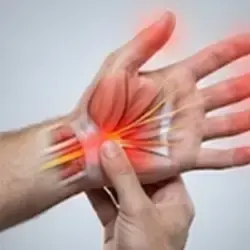
Relieve numbness and wrist pain caused by median nerve compression.
Select Your Nearest Centre
No surgery needed. 94.2% of our patients recover with a plan built just for them.
Select Your Nearest Centre