Targeted physiotherapy for spondylolisthesis — reducing lower back pain caused by a slipped vertebra, building deep core and spinal stability, and helping you return to full daily function without surgery.
Designed to reduce pain, restore mobility, and improve your quality of life — with a programme built around your specific condition and recovery goals.
Targeted manual therapy and lumbar traction reduce mechanical joint pain at the slip level — providing relief from the persistent aching and episodic sharp lower back pain.
Specific transverse abdominis and multifidus strengthening exercises create a muscular corset around the unstable segment — the most effective long-term treatment for vertebral stability.
Nerve mobilisation techniques and directional exercises reduce the radiating pain into the buttocks and legs caused by nerve root compression at the slipped level.
Graduated rehabilitation improves the muscular endurance needed for prolonged standing, walking, and daily activities — progressively expanding your activity capacity.
For Grades 1 and 2 spondylolisthesis, structured physiotherapy avoids surgery in the majority of patients. Even for Grade 3, physiotherapy significantly improves quality of life and post-surgical outcomes.

Spondylolisthesis occurs when one vertebra slips forward over the vertebra below it — most commonly in the lower lumbar spine at L4–L5 or L5–S1. The forward displacement places stress on the surrounding discs, joints, and nerve roots, causing lower back pain that can radiate into the buttocks and legs (sciatica), stiffness and tightness in the lower back, weakness or fatigue in the legs with prolonged standing or walking, and in severe cases, a visible change in posture. It ranges from Grade 1 (mild slip) to Grade 4 (severe), and Grades 1 and 2 are highly amenable to conservative physiotherapy management.
Our physiotherapy programme for spondylolisthesis focuses on stabilising the slipped vertebra through deep core strengthening, reducing neural tension causing leg symptoms, and improving overall lumbar spine mechanics. We use a McKenzie-based and lumbar stabilisation approach combined with manual therapy, nerve mobilisation, and a progressive return to full activity. Spinal flexion activities are carefully managed to avoid increasing the forward slip.
Avoid Surgery with Physio
Excellent Outcomes
Structured Programme
Every recovery journey is different.
Here is what our patients say about their experience at New Age Rehab.
Posted on GoogleTrustindex verifies that the original source of the review is Google. I had my shoulder treatment at New Age Home Physio with Dr. Junaid, and the experience was excellent. He carefully assessed my condition and created a personalized treatment plan. I noticed significant improvement in my pain and movement within a few sessions. Highly professional and highly recommended! The sessions were well-structured and very comfortable, and he patiently explained every step of the therapy. I truly appreciate the care and dedication shown throughout my recovery process.Posted on GoogleTrustindex verifies that the original source of the review is Google. Dr Sharma's team is very helpful and courteous. Thank you for your efforts to trying to get me going.🙏Posted on GoogleTrustindex verifies that the original source of the review is Google. I had a very good treatment at New Age Physiotherapy Centre, Uday Park. Dr. Junaid Ansari is an excellent physiotherapist—highly knowledgeable, well-behaved, and very professional. He is extremely caring and attentive towards his patients and explains the treatment clearly. I felt comfortable and satisfied throughout my sessions. His approach to patient care is truly commendable. I would highly recommend this centre to anyone looking for quality physiotherapy treatment. I am very thankful to Dr. Rahul Sharma for suggesting the right treatment for me. His guidance was clear and reassuring, and the entire treatment process went very smoothly.I truly appreciate his support and care. My thanks to Dr. Anam & other staff.My sincere thanks to Dr Junaid who was my physiotherapy doctor. Thank you very much for your guidance & therapy.Posted on GoogleTrustindex verifies that the original source of the review is Google. The Physio clinic centre is an excellent centre . They attend very promptly. I am extremely satisfied with my progress especially after my lung cancer where Anam Siddiqui has been very professional in her work and helped me to recover . I am playing my tennis now . Cdr Ravi Inder singhPosted on GoogleTrustindex verifies that the original source of the review is Google. A lot of care! And it’s good to have a qualified and patient doctor around, Dr Rahul Sharma. His team is also good!Posted on GoogleTrustindex verifies that the original source of the review is Google. Had gone for a hamstring pull and issues with knees and Dr Junaid and Dr Rahul helped overcome them within days!Posted on GoogleTrustindex verifies that the original source of the review is Google. Mr Junaid Ansari one of the best professional and work oriented person from this clinic. I took session from him and now can walk and move easily. He has the very good knowledge of each ligaments and doing treatment by physi accordingly. Now I am able to do walk and inflammation has been reduced. Thankyou for the guidance and therapy.
Have questions about Spondylolisthesis treatment? Here are the most common queries — to help you understand what to expect and how physiotherapy can help.
Grade 1 and Grade 2 spondylolisthesis — the most common — are manageable with physiotherapy in the majority of cases. Grades 3 and 4 with significant neural involvement may require surgical consultation, but physiotherapy is always the first-line treatment.
Yes — the right exercises are central to treatment. Core stabilisation exercises are specifically prescribed to support the unstable segment. High-impact loading, spinal flexion under load, and unsupported forward bending are generally avoided in the early stages.
Initial pain relief is typically achieved within 4–6 weeks. A full stabilisation programme — building the core strength needed for long-term spinal support — takes 10–14 weeks. Many patients continue a maintenance home exercise programme indefinitely.
In most cases, the vertebra does not fully reposition. The goal of physiotherapy is to stabilise the spine at the current position — through muscular support — so that the slip does not progress and symptoms are resolved.
If left untreated for extended periods with significant neural compression, permanent nerve damage is possible — though rare. This is a key reason to begin physiotherapy promptly rather than managing with painkillers alone.
Heavy spinal loading — such as deadlifts with excessive load or contact sports with severe spinal impact — may need to be permanently modified. Your physiotherapist will provide a personalised activity guide based on your slip grade and lifestyle.
Discover treatments that support your recovery and improve overall movement and function.
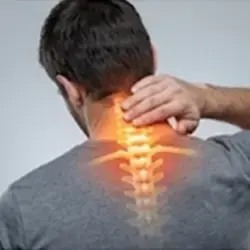
Reduce neck pain and stiffness with manual therapy and rehabilitation.
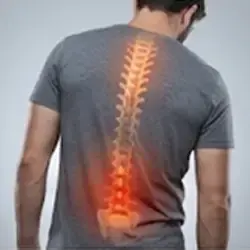
Specialist care for sports-related injuries — pain relief, faster recovery, and full performance restoration.
Select Your Nearest Centre
No surgery needed. 94.2% of our patients recover with a plan built just for them.
Select Your Nearest Centre